
Ingrown Toenails and Toenail Bracing
An ingrown toenail occurs when the edge of the nail grows into the skin of the toe. It can become painful, inflamed and sometimes infected. At Sports and Structural Podiatry in Maroochydore, we treat ingrown toenails gently and help you understand why it happened, so it is less likely to come back.
What it is
Signs of an ingrown toenail
Pain along the nail edge
Tenderness down the side of the nail, often worse in closed shoes or when the toe is pressed.
Redness and swelling
The skin beside the nail may look red, puffy or overgrown.
Signs of infection
Increasing pain, heat, pus or discharge can mean the area is infected and needs attention soon.
Why it happens
Common causes
- Cutting the nail too short or rounding off the corners
- Tight or narrow shoes, or shoes that press on the toes during sport
- A naturally curved or wide nail shape
- Injury to the toe, such as stubbing or kicking
- Picking or tearing the nail edge
Your visit
What happens at your appointment
Your first appointment usually covers four things.
01
Assessment
We look at the nail, the surrounding skin and your footwear, and check for signs of infection.
02
Gentle treatment
In most cases, a small piece of the nail edge is removed to take the pressure off and leave a gap for the skin to heal.
03
Prevention plan
We discuss nail cutting, footwear and, where suitable, toenail bracing to help stop it recurring.
04
Review
Where needed, we book a review to check the area is healing and the nail is growing straight.
Treatment
Ingrown toenail treatment options
The right option depends on the nail and how often the problem has come back. Options may include:
Conservative nail care
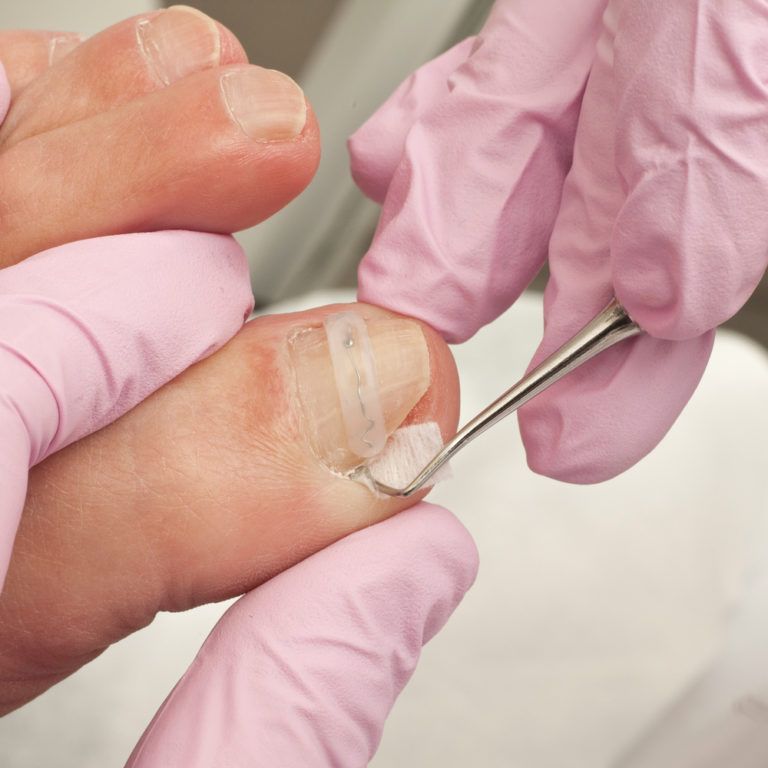
Removing a small piece of the nail edge to relieve pressure. In many cases the nail then grows out straight rather than into the skin.
Toenail bracing
A small brace bonded to the nail surface that gently changes the curve of the nail as it grows.
Footwear advice
Guidance on shoes for work, school and sport that give the toes enough room.
Nail cutting advice
How to cut your nails to reduce the chance of the edge digging in again.
Your podiatrist will talk you through the options, expected benefits and any risks before you decide.
When to book
Book in when the nail edge first becomes painful. Early treatment is usually simpler and more comfortable.
If you have diabetes, poor circulation or reduced feeling in your feet, or if the toe is red, hot and swollen with pus, book promptly and do not try to cut the nail yourself.
FAQs
Frequently asked questions
Does treatment hurt?
Most people find conservative treatment comfortable. Your podiatrist will explain what to expect and check how you are feeling throughout.
Can children have ingrown toenails treated?
Yes. Ingrown toenails are common in active children and teenagers. Please bring a parent or guardian to the appointment.
Will it come back?
Sometimes, especially with a curved nail shape. Footwear changes, correct nail cutting and toenail bracing can all help reduce the chance of it returning.
Should I cut a V in the nail?
No. This is a common myth and does not stop a nail growing in. It is better to have it assessed.
Do I need a referral?
No. You can book directly with us. If your GP has referred you, please bring the referral to your appointment.
Can I claim on my health fund?
If your private health insurance includes extras cover for podiatry, you may be able to claim part of the cost. Check with your fund for your level of cover.
Book an assessment
Shop 202, Building 2, Ground Floor, 2 Emporio Place, Maroochydore QLD 4558
Book an AppointmentCall (07) 5479 1211