
Corns and Callus
Corns and calluses are areas of thick, hard skin caused by friction and pressure. They can be painful to walk on. At Sports and Structural Podiatry in Maroochydore, treatment is usually comfortable, and we look at why the pressure is there so you can stay more comfortable for longer.
What they are
Corns and calluses
Callus
A broader patch of thickened skin, often on the ball of the foot, the heel or the side of the big toe, where the skin takes repeated pressure or rubbing.
Corns
A smaller, deeper area of hard skin, often on or between the toes, that can feel like a stone in your shoe.
Cracked heels
Dry callus on the heels can split, which can be painful and lets bacteria in. Read our article on dry and cracked heels.
Why they happen
What causes corns and calluses
- Shoes that are too tight, too loose or rub in one spot
- Sandals and loose shoes that let the foot slide around
- Toe shapes such as bunions, hammer toes or claw toes
- The way your foot strikes the ground and takes load when you walk
- Thin, dry skin, which becomes more common as we get older
Hard skin is the body protecting itself from pressure. If the pressure stays, the skin usually builds up again, which is why we look at the cause as well as the skin.
Your visit
What happens at your appointment
01
Assessment
We look at where the hard skin is, your footwear and how your feet take load, and check your circulation and feeling where needed.
02
Treatment
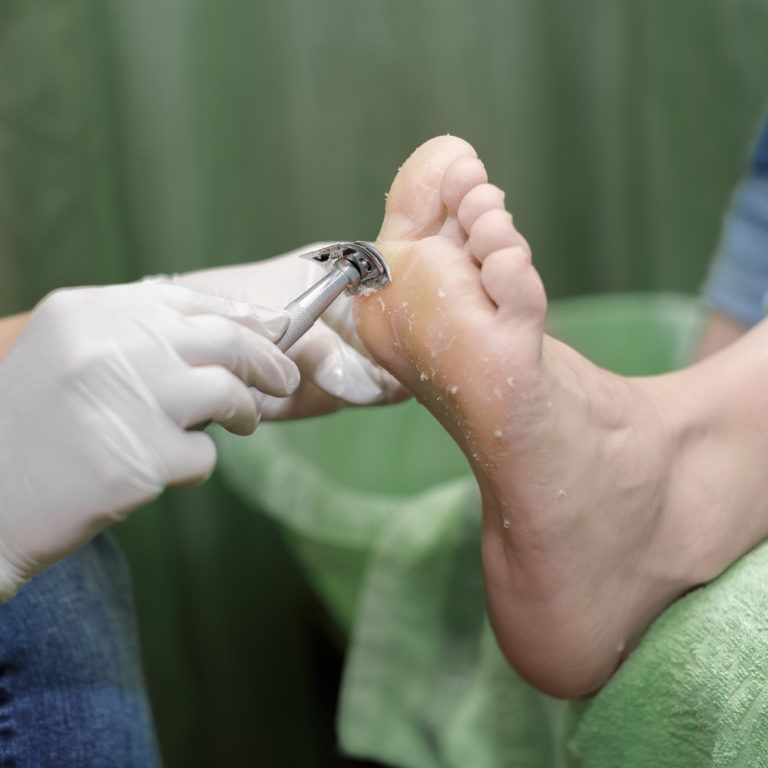
The excess hard skin is gently removed (debrided). Most people find this comfortable.
03
Pressure relief
Where needed, we discuss padding, footwear changes or orthotics to spread the pressure.
04
Skin care plan
We suggest how to care for your skin at home and how often to come back.
Treatment
Treatment options
If the callus comes back quickly, a change in footwear or orthotics to redistribute the pressure may be discussed.
Debridement
Careful removal of the thickened skin and corns by your podiatrist.
Padding and offloading
Simple pads or toe props to take pressure off a sore spot.
Footwear advice
Guidance on the shape and fit of shoes that suit your feet.
Custom orthotics
Made from a 3D scan of your feet and an individual prescription, where your assessment shows they are appropriate for you.
Your podiatrist will talk you through the options, expected benefits and any risks before you decide.
When to book
Book in if hard skin is painful to walk on, keeps coming back, or has started to crack.
If you have diabetes, poor circulation or reduced feeling in your feet, do not use corn pads, blades or acids at home. Book an appointment instead, and seek care promptly if the skin breaks or looks infected.
FAQs
Frequently asked questions
Does treatment hurt?
Treatment is usually comfortable. Your podiatrist will check how you are feeling throughout.
Will the corn come back?
It can, if the pressure that caused it is still there. Changing footwear, padding or orthotics can reduce the chance of it returning.
Should I use corn pads from the chemist?
Some medicated corn pads contain acid, which can damage healthy skin. They are not suitable for people with diabetes or poor circulation. Ask your podiatrist first.
Do I need a referral?
No. You can book directly with us. If your GP has referred you, please bring the referral to your appointment.
Can I claim on my health fund?
If your private health insurance includes extras cover for podiatry, you may be able to claim part of the cost. Check with your fund for your level of cover.
Book an assessment
Shop 202, Building 2, Ground Floor, 2 Emporio Place, Maroochydore QLD 4558
Book an AppointmentCall (07) 5479 1211